
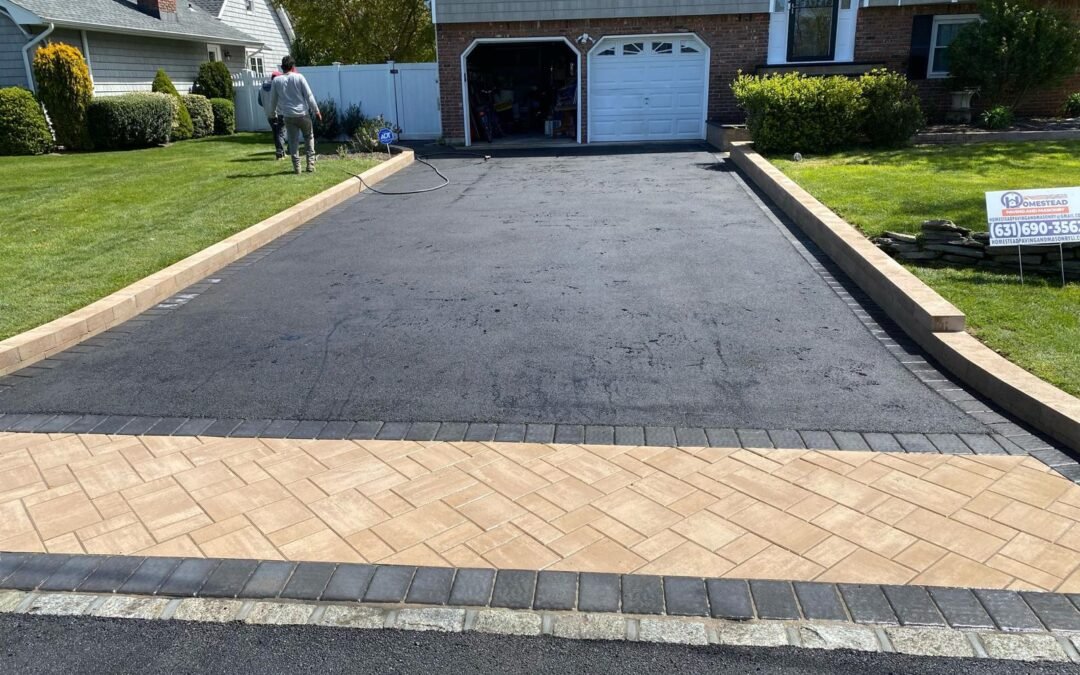
If you are planning a new driveway in New Jersey, the first real decision you will face is material. Asphalt driveways vs concrete driveways is not just a price question. It is about how well each surface handles our freeze-thaw winters, how much maintenance you are signing up for, and what makes sense for your property 10 or 20 years from now. Most homeowners in towns like East Brunswick, Freehold, and Piscataway end up choosing asphalt, and there are solid reasons for that. But concrete has its place too, and getting the wrong material installed on your lot can cost you thousands in repairs down the road.
Here is the short answer: for most New Jersey homeowners, asphalt is the better all-around choice. It costs less to install, handles cold weather better, and is easier to repair. Concrete lasts longer on paper, but it is more expensive upfront, cracks under freeze-thaw stress, and stains from road salt and de-icers. The right pick depends on your budget, your property layout, and how long you plan to stay in your home.
This guide breaks down every factor that matters, with real costs and local considerations specific to New Jersey.
What Each Material Is Made Of and Why It Matters
Asphalt is a mix of aggregate (crushed stone, sand, and gravel) bound together with bitumen, a petroleum-based binder. The dark surface is flexible, which is a real advantage in climates that go through seasonal temperature swings. When the ground shifts slightly during a New Jersey winter, asphalt flexes with it rather than cracking.
Concrete is a blend of cement, water, sand, and aggregate. It cures into a rigid slab that is extremely strong under compression. That rigidity is a benefit in stable, warm climates. In New Jersey, where ground temperatures can swing from 95 degrees in August to well below freezing in January, it becomes a liability. Rigid surfaces are more prone to cracking when the soil underneath expands and contracts with moisture and frost.
Asphalt Driveways vs Concrete Driveways: Cost Breakdown for NJ Homeowners
Cost is usually the first thing homeowners ask about, and the gap between asphalt and concrete is significant. Here is what New Jersey homeowners can expect to pay in 2026:
| Factor | Asphalt | Concrete |
|---|---|---|
| Material and labor (per sq ft) | $7 to $15 | $8 to $20 |
| Typical 600 sq ft driveway | $4,200 to $9,000 | $4,800 to $12,000 |
| Stamped or decorative finish | Not commonly available | Add $10 to $28 per sq ft |
| Seal coating | $0.15 to $0.25 per sq ft every 3 to 5 years | $0.10 to $0.20 per sq ft every 3 to 5 years |
| Crack repair | $1 to $3 per linear foot | $3 to $25 per sq ft |
| Full resurfacing | $3 to $7 per sq ft (overlay possible) | Full removal and replacement required |
One thing the national cost guides do not always mention: labor rates in northern New Jersey, particularly in Essex, Morris, and Union counties, tend to run 10% to 20% higher than the state average. If your property is in West Orange, Morristown, or Summit, budget toward the higher end of these ranges.
How New Jersey Weather Affects Your Driveway
This is where the asphalt vs concrete decision gets real for anyone living in the Garden State. New Jersey sits in USDA Hardiness Zones 6a through 7b, which means we get legitimate winters. The ground freezes, thaws, and freezes again multiple times between November and March. That cycle is the single biggest threat to any paved surface.
Asphalt is flexible. When the subgrade shifts during a freeze-thaw event, asphalt bends slightly and settles back. Small cracks that do appear can be filled during routine seal coating. Concrete does not have that flexibility. When the ground heaves, concrete slabs crack. And unlike asphalt, you cannot resurface concrete. A cracked slab usually means removal and replacement of that entire section.
Road salt is another factor. New Jersey municipalities use a lot of salt on public roads, and that salt gets tracked onto your driveway. De-icing chemicals accelerate surface deterioration on concrete through a process called spalling, where the top layer flakes and pits. Asphalt handles salt exposure with far less visible damage.
According to the National Oceanic and Atmospheric Administration, the northeastern United States has seen a measurable increase in freeze-thaw cycles over the past two decades, making material flexibility even more important for driveway longevity.
Lifespan and Long-Term Value
On paper, concrete wins the lifespan comparison. A well-installed concrete driveway can last 30 to 50 years with minimal maintenance. Asphalt typically lasts 20 to 30 years, and that number depends heavily on how well it is maintained.
But lifespan numbers without context are misleading. In New Jersey’s climate, concrete driveways rarely hit the 50-year mark without significant repair costs. Freeze-thaw cracking, salt damage, and tree root pressure all take their toll. Meanwhile, asphalt driveways that are properly seal coated every 3 to 5 years and get timely crack repairs can reliably reach 25 to 30 years.
There is also the resurfacing advantage. When an asphalt driveway starts showing its age, you can overlay a new layer of hot mix asphalt on top of the existing surface for $3 to $7 per square foot. That essentially resets the clock for another 10 to 15 years. Concrete does not offer that option. Once a concrete slab fails, the old surface has to be demolished and hauled away before a new one can be poured.
Maintenance: What You Are Signing Up For
Both materials need some care, but the type of maintenance is different.
Asphalt driveways should be seal coated 6 to 12 months after installation and then every 3 to 5 years after that. Seal coating fills small surface cracks, restores the dark color, and protects against UV oxidation and water penetration. Most NJ homeowners spend $150 to $300 per seal coat application on an average-sized driveway. Small cracks can be filled with DIY products from any hardware store.
Concrete driveways need less frequent attention, but when something goes wrong, the fix is more expensive. Surface sealing every 3 to 5 years helps prevent staining and spalling. But if a section cracks or heaves, repair usually means cutting out and replacing that slab, which can run $500 to $1,500 per section depending on size and access.
For busy homeowners who do not want to think about their driveway much, concrete may seem appealing at first. But the reality is that when a concrete driveway needs attention, the cost is substantially higher than routine asphalt maintenance.
Appearance and Curb Appeal
Concrete offers more design flexibility. Stamped patterns, exposed aggregate finishes, staining, and tinting can turn a concrete driveway into a real design element. If curb appeal is your top priority and you are in a higher-end neighborhood where decorative driveways are common, concrete gives you more options.
Asphalt has a clean, uniform black finish that looks sharp when freshly installed and seal coated. While you cannot stamp or stain asphalt the way you can concrete, a well-maintained asphalt driveway with clean edges and proper grading looks professional and neat. For most residential properties in New Jersey, that is exactly what buyers expect to see.
According to Realtor.com, a well-maintained driveway of either material contributes positively to a home’s first impression, which directly influences buyer interest and perceived value.
Environmental Considerations
Asphalt is one of the most recycled materials in the United States. The National Asphalt Pavement Association reports that over 87 million tons of reclaimed asphalt pavement are reused annually. When an asphalt driveway reaches the end of its life, the old material can be milled up and recycled into new asphalt mix.
Concrete is also recyclable, but the process is less common for residential projects. Demolished concrete is typically crushed and used as fill material rather than being reformed into new concrete.
For homeowners concerned about stormwater runoff, both materials have permeable options. Permeable asphalt and pervious concrete allow water to filter through the surface and into the ground below, reducing runoff and helping comply with local stormwater regulations. New Jersey’s Department of Environmental Protection has been encouraging permeable paving options in municipalities that deal with flooding and drainage issues.
When Concrete Makes More Sense
Despite asphalt’s advantages in our climate, there are situations where concrete is the better call:
If you are building a driveway that doubles as a basketball court or heavy-use recreational surface, concrete’s rigid, flat finish is better suited for that kind of activity. If your property is in a planned community or HOA that requires a specific material or decorative finish, concrete may be your only option. And if you plan to stay in your home for 30 or more years and want to minimize maintenance visits, concrete’s lower maintenance frequency (though higher repair costs) may appeal to you.
When Asphalt Is the Clear Winner
For most New Jersey homeowners, asphalt wins on the factors that matter most. It costs less to install, performs better in freeze-thaw conditions, is cheaper and easier to repair, and can be resurfaced rather than replaced. If you live in a standard residential neighborhood, plan to stay 10 to 20 years, and want a durable driveway without overspending, asphalt is the practical choice.
Asphalt also makes more sense for properties with longer driveways or irregular layouts, where the per-square-foot savings add up quickly. A 1,000-square-foot driveway in Matawan or Old Bridge could save $3,000 to $5,000 by choosing asphalt over concrete.
Why All Stone Home Improvements Is the Right Contractor for Your NJ Driveway
Choosing the right material is only half the decision. The other half is choosing a contractor who knows how to install it correctly for our local conditions. All Stone Home Improvements has been serving homeowners across New Jersey with professional asphalt paving and concrete paving services for years. The team understands the specific soil conditions, drainage patterns, and frost depths that affect driveway performance in towns like East Brunswick, Piscataway, Old Bridge, and West Orange.
Every project starts with a proper site evaluation, including grading assessment and drainage planning. All Stone uses quality materials, experienced crews, and follows industry-standard installation processes to make sure your driveway performs the way it should for decades. Whether you go with asphalt or concrete, the installation quality matters as much as the material itself.
Ready to get started? Request a free estimate and talk to a local paving expert who can walk your property and recommend the best solution for your specific situation.
Frequently Asked Questions
Is asphalt or concrete cheaper for a driveway in New Jersey?
Asphalt is cheaper in most cases. A typical 600-square-foot asphalt driveway in New Jersey costs $4,200 to $9,000 installed, while a concrete driveway of the same size runs $4,800 to $12,000. Asphalt also costs less to repair and can be resurfaced instead of fully replaced.
How long does an asphalt driveway last in NJ?
A properly installed and maintained asphalt driveway lasts 20 to 30 years in New Jersey. Regular seal coating every 3 to 5 years and timely crack repairs are the key to reaching the upper end of that range.
Does concrete crack in New Jersey winters?
Yes. Concrete is a rigid material that is vulnerable to freeze-thaw cycling. When water seeps into small surface pores and freezes, it expands and causes cracking and spalling. New Jersey typically experiences multiple freeze-thaw cycles each winter, which accelerates this damage.
How often should I seal coat my asphalt driveway?
Seal coat your asphalt driveway 6 to 12 months after installation, then every 3 to 5 years. In New Jersey, where road salt and weather stress are factors, staying closer to the 3-year interval is recommended.
Can you resurface a concrete driveway?
Concrete driveways cannot be resurfaced the way asphalt can. Minor surface damage can be patched, but structural cracking usually requires removing and replacing the affected slab. Asphalt driveways can receive a new overlay layer, which extends their life by 10 to 15 years at a fraction of full replacement cost.
Which driveway material handles road salt better?
Asphalt handles road salt and de-icing chemicals better than concrete. Salt accelerates a process called spalling on concrete surfaces, where the top layer flakes and pits. Asphalt is more resistant to chemical damage from salt exposure.
Is a concrete driveway worth the extra cost?
A concrete driveway can be worth the extra cost if you want decorative finishes like stamped or stained surfaces, plan to stay in your home for 30 or more years, or live in an HOA that requires concrete. For most standard residential properties in New Jersey, asphalt delivers better value relative to its cost and climate performance.
What is the best driveway material for New Jersey homes?
For most New Jersey homeowners, asphalt is the best choice. It costs less, handles freeze-thaw conditions better, is easier and cheaper to repair, and can be resurfaced. Concrete is a better fit for decorative applications or properties where long-term low maintenance is the top priority and budget is less of a concern.
Does a new driveway increase home value in New Jersey?
Yes. A well-maintained driveway improves curb appeal and contributes to a positive first impression for potential buyers. Both asphalt and concrete driveways add value, but the return depends on the condition and appearance of the surface rather than the material alone.
How long before you can drive on a new asphalt driveway?
You can typically walk on a new asphalt driveway within 24 hours and drive on it after 3 to 5 days, depending on weather conditions. Concrete driveways need about 7 days of curing time before vehicle traffic is safe, and full curing takes up to 28 days.